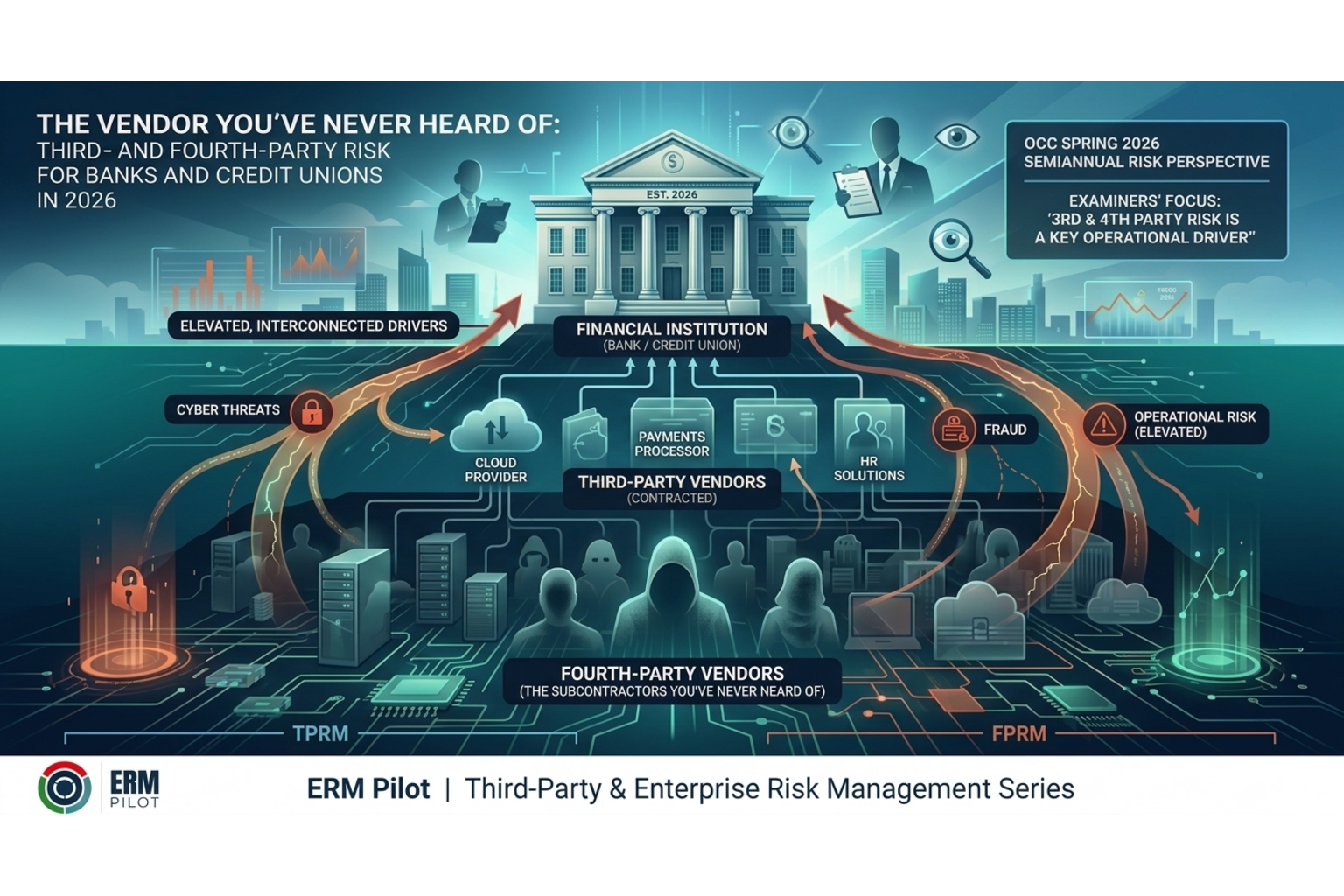
The Vendor You've Never Heard Of
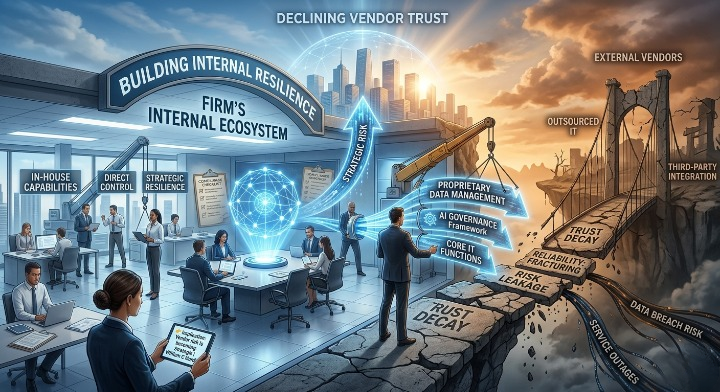
Third- and fourth-party risk is now an operational and strategic issue as concentration, AI dependencies, and shared infrastructure elevate the exposure across financial institutions.
Read ArticleExpert perspectives on enterprise risk management, business continuity, and navigating complex regulatory landscapes.
Third- and fourth-party risk is now an operational and strategic issue as concentration, AI dependencies, and shared infrastructure elevate the exposure across financial institutions.
Read Article
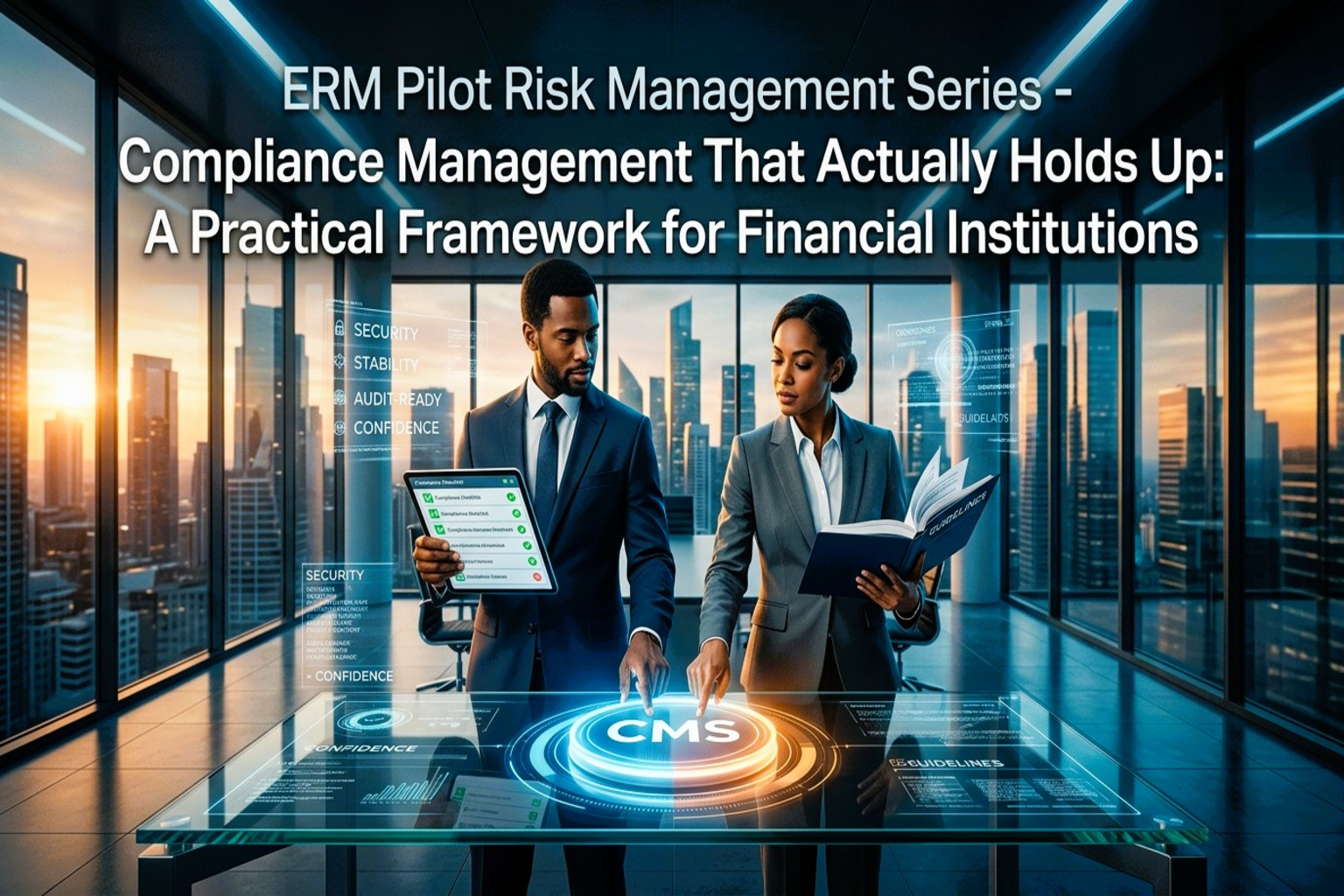
A strong compliance management system is not built on policy volume alone. It depends on a traceable chain from regulation to obligation, control, evidence, and assessment.
Read Article
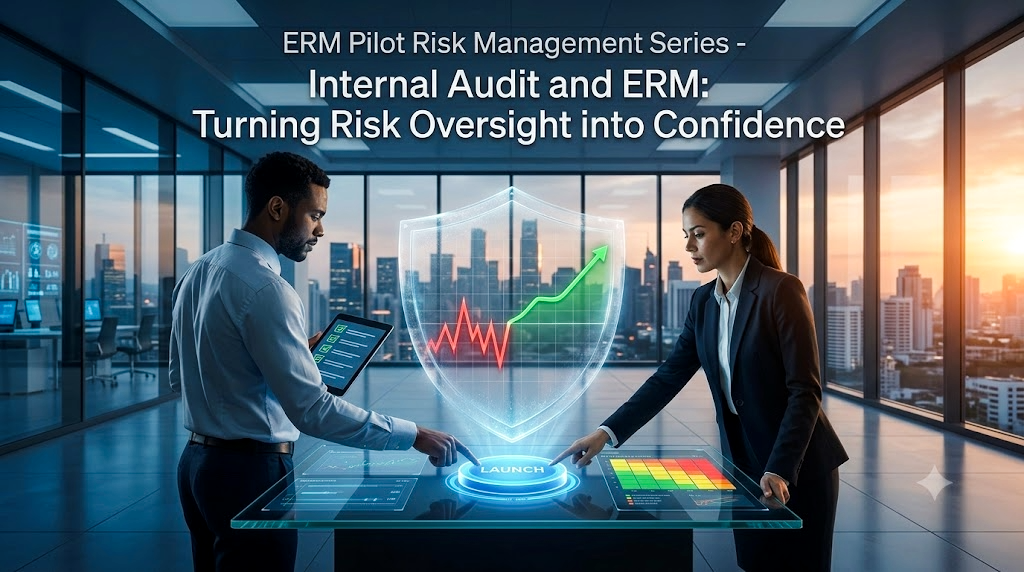
Internal Audit should not own ERM, but it can strengthen confidence by independently testing whether risk management is working and where assurance is needed most.
Read Article
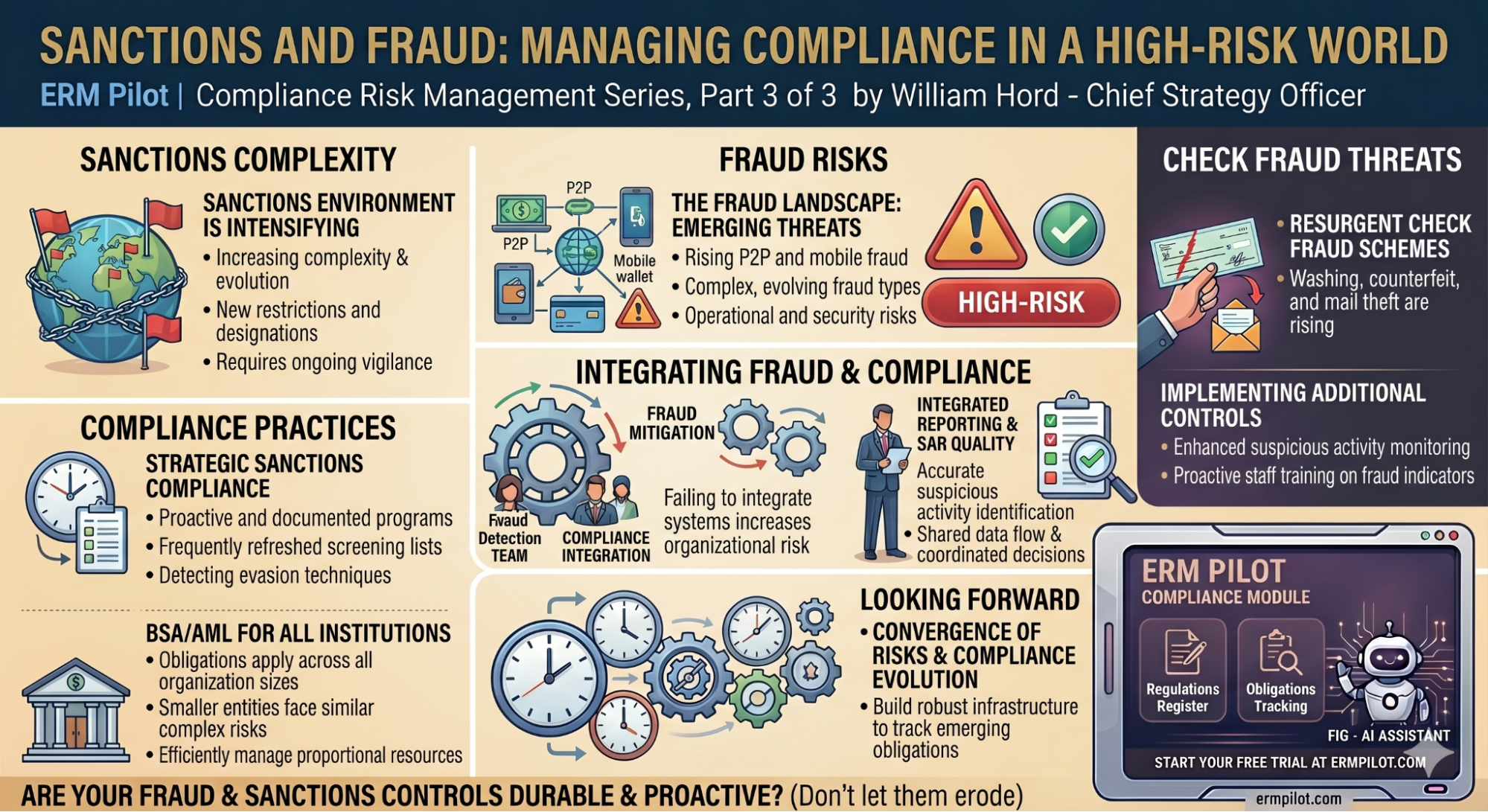
Sanctions volatility and fraud convergence now demand adaptive compliance governance. Integrate sanctions, fraud, and AML controls to keep pace with shifting enforcement.
Read Article
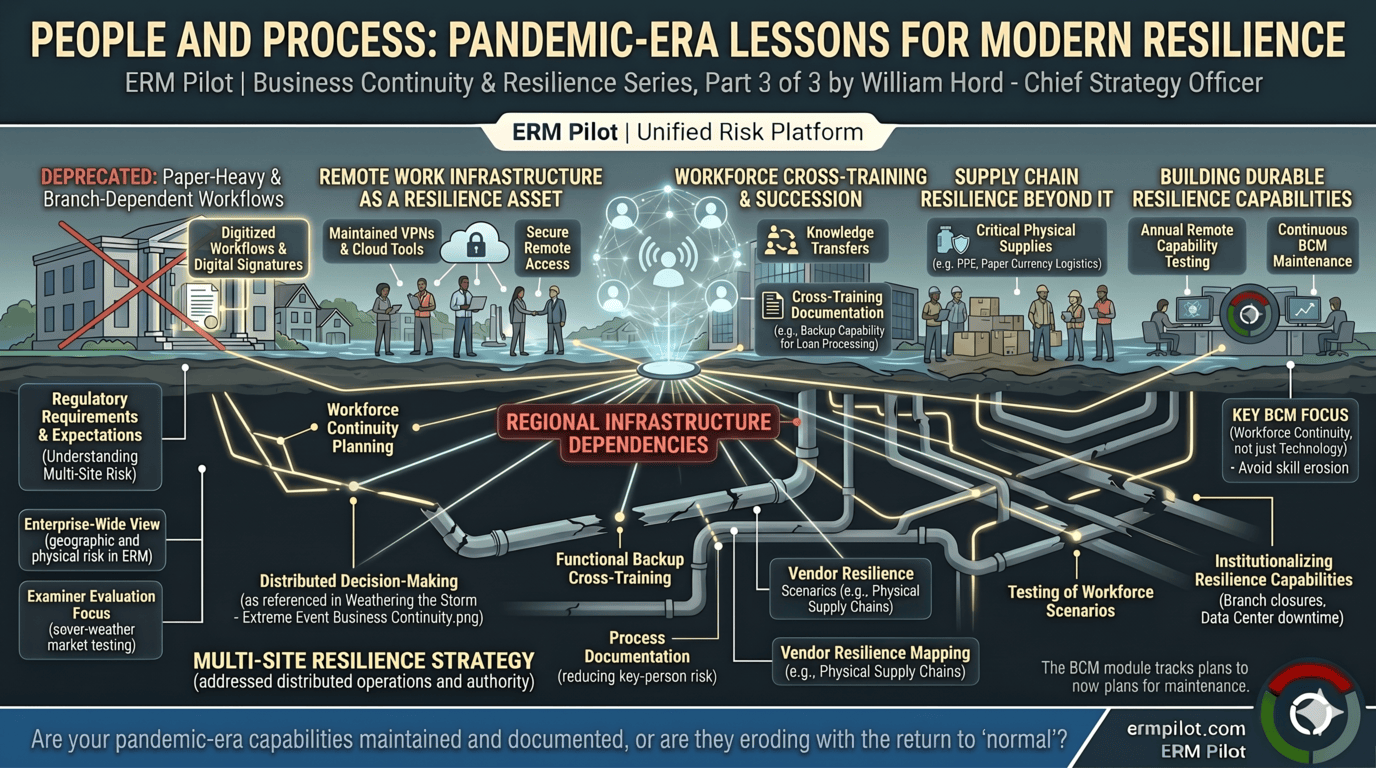
Pandemic-era resilience gains erode quickly without maintenance. Preserve remote continuity, cross-training, and operational testing as durable BCM capabilities.
Read Article
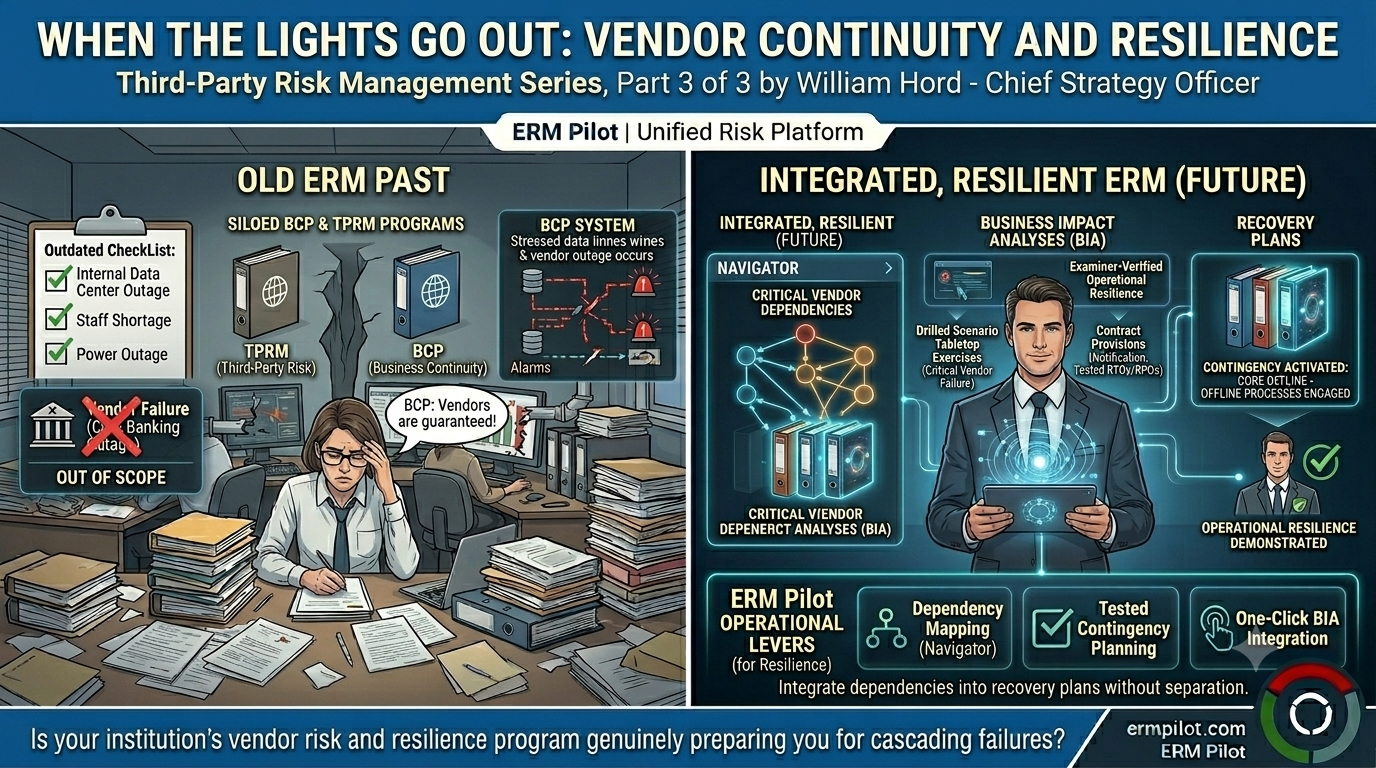
Operational resilience fails when vendor outages are treated as external events instead of core continuity scenarios. Align TPRM contracts, testing, and BCP execution.
Read Article
Model risk guidance has shifted in 2026, creating a governance gap for generative AI. Learn where AI adds value in ERM and how to govern it defensibly.
Read Article
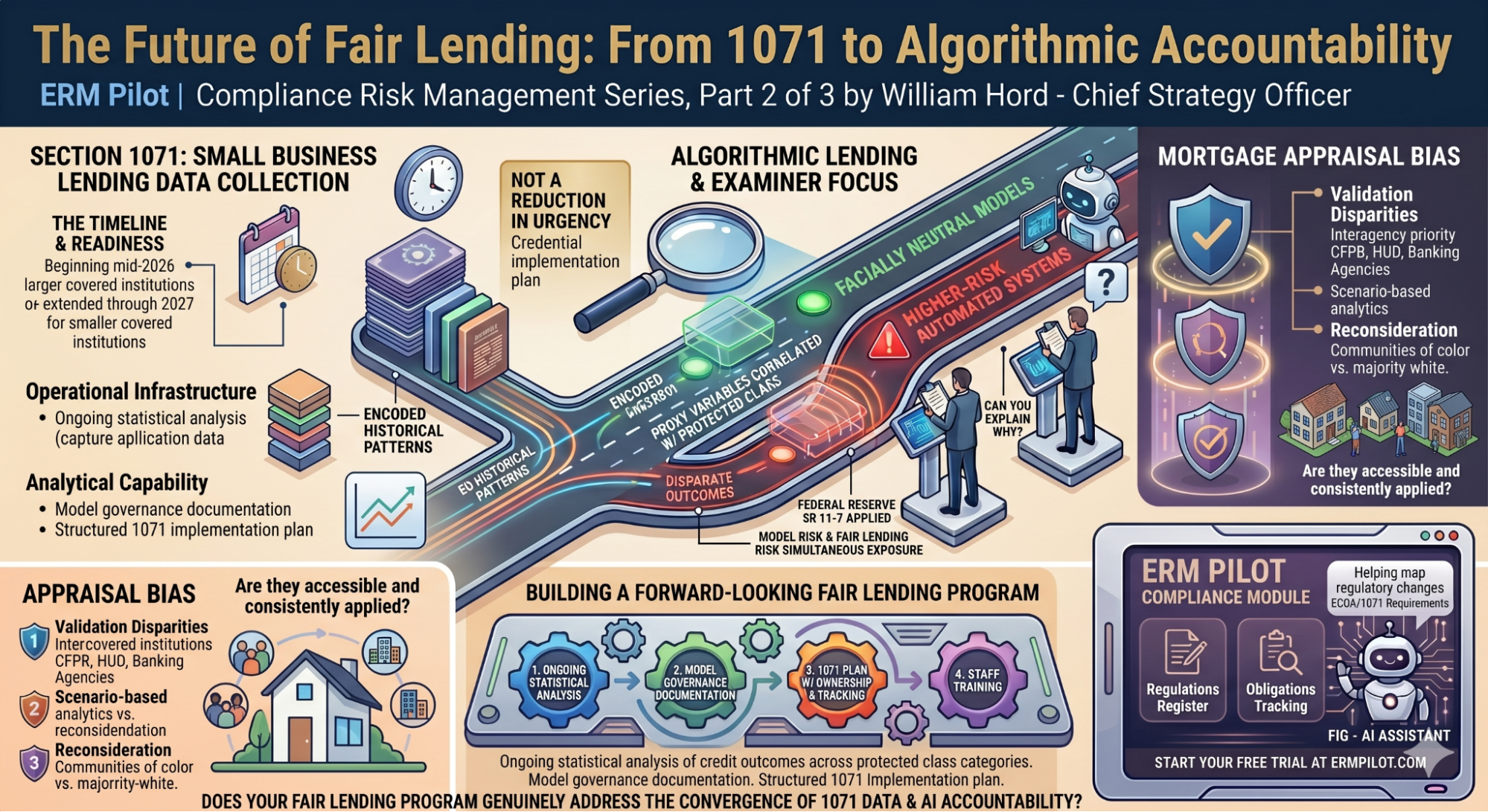
Fair lending compliance is evolving toward data governance and oversight of automated systems. Section 1071, model risk management, and appraisal bias are key focus areas.
Read Article
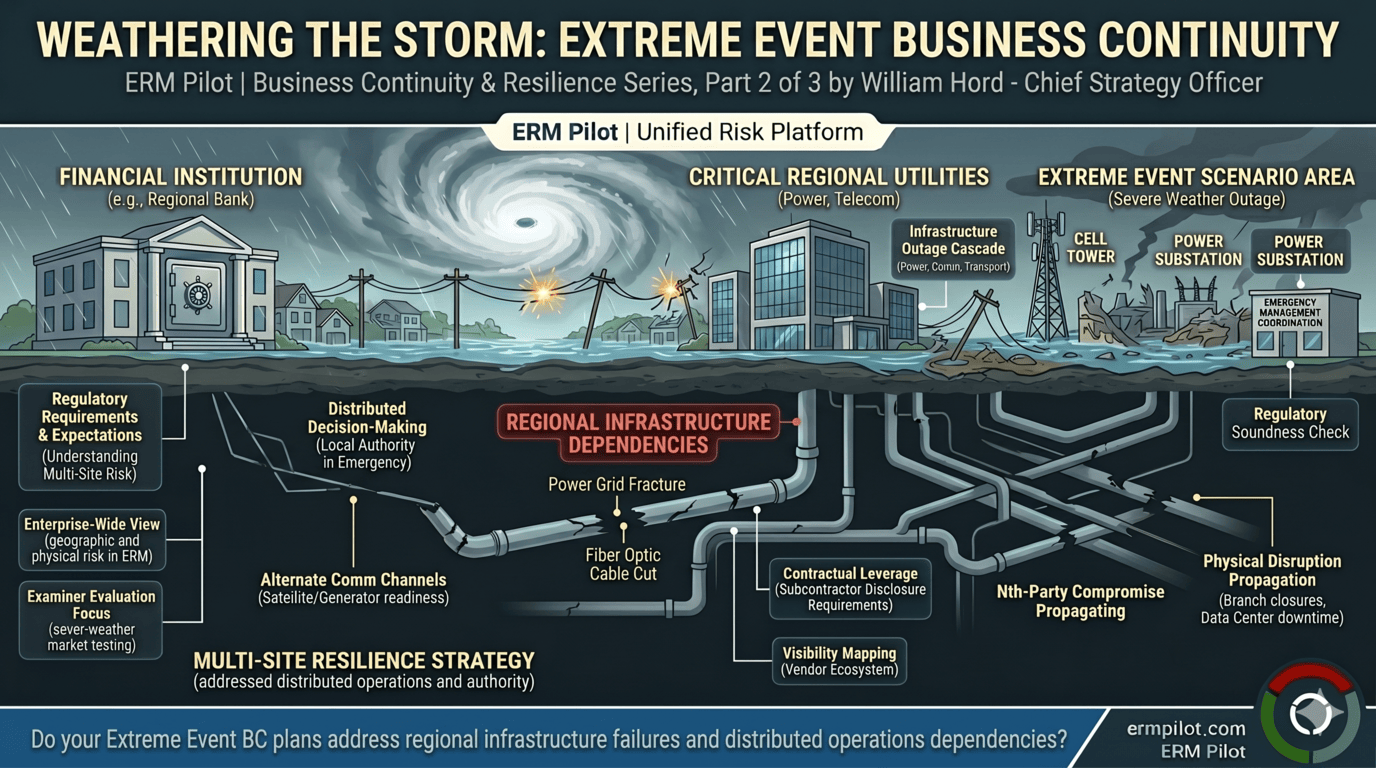
Weather and physical disruptions demand multi-site resilience planning beyond traditional alternate sites. Learn what regulators examine in extreme event scenarios.
Read Article
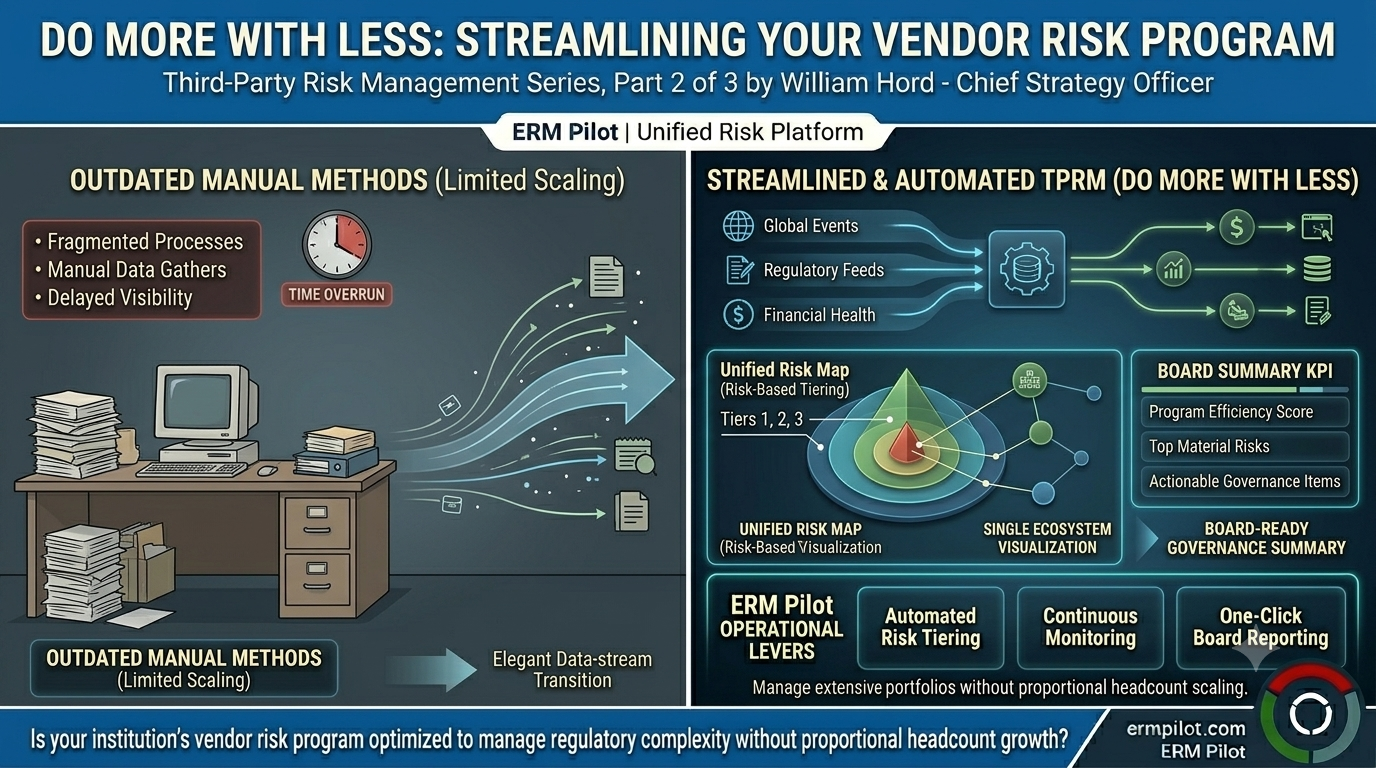
TPRM teams are under-resourced relative to their scope. Discover how risk tiering, continuous monitoring automation, and board dashboards reduce manual workload.
Read Article
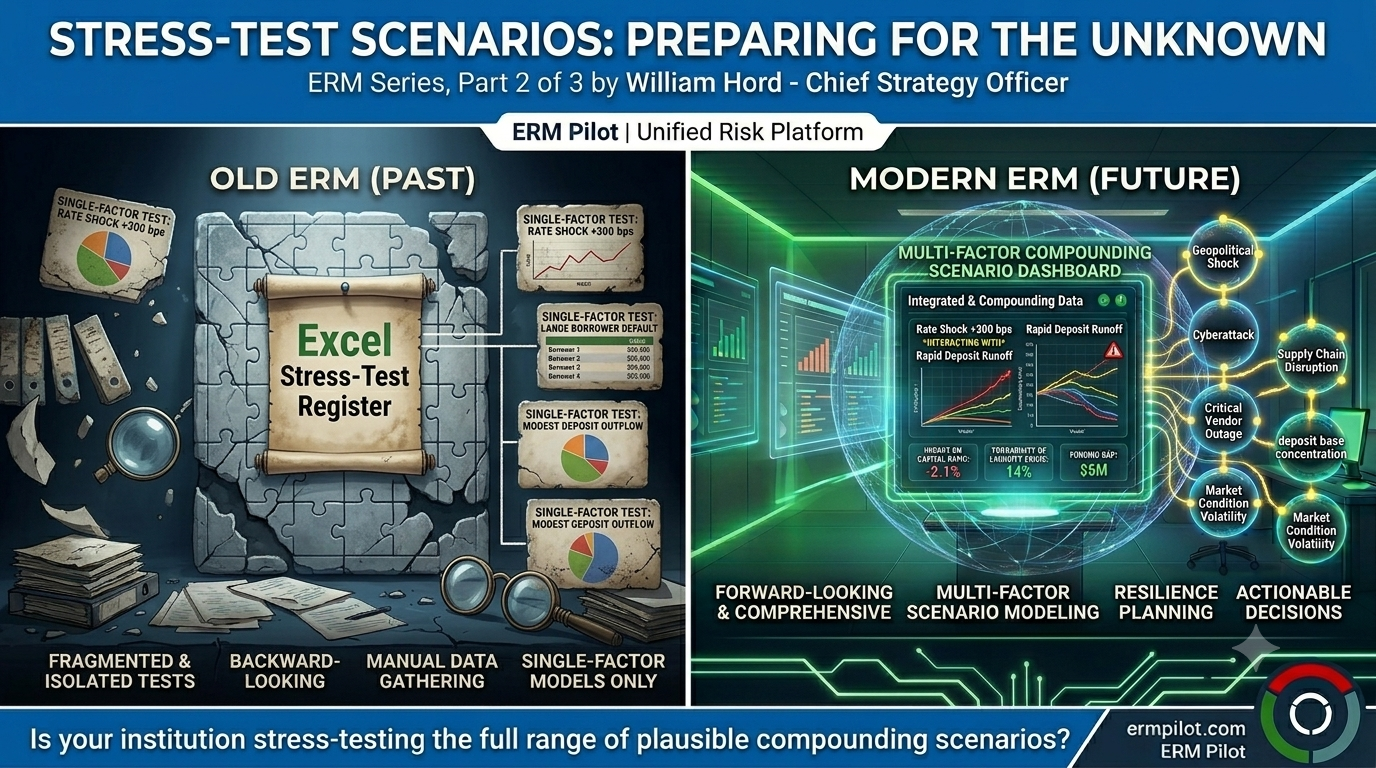
Modern stress testing requires multi-factor scenario modeling, not single-variable analysis. Learn how to build scenario frameworks that regulators expect.
Read Article
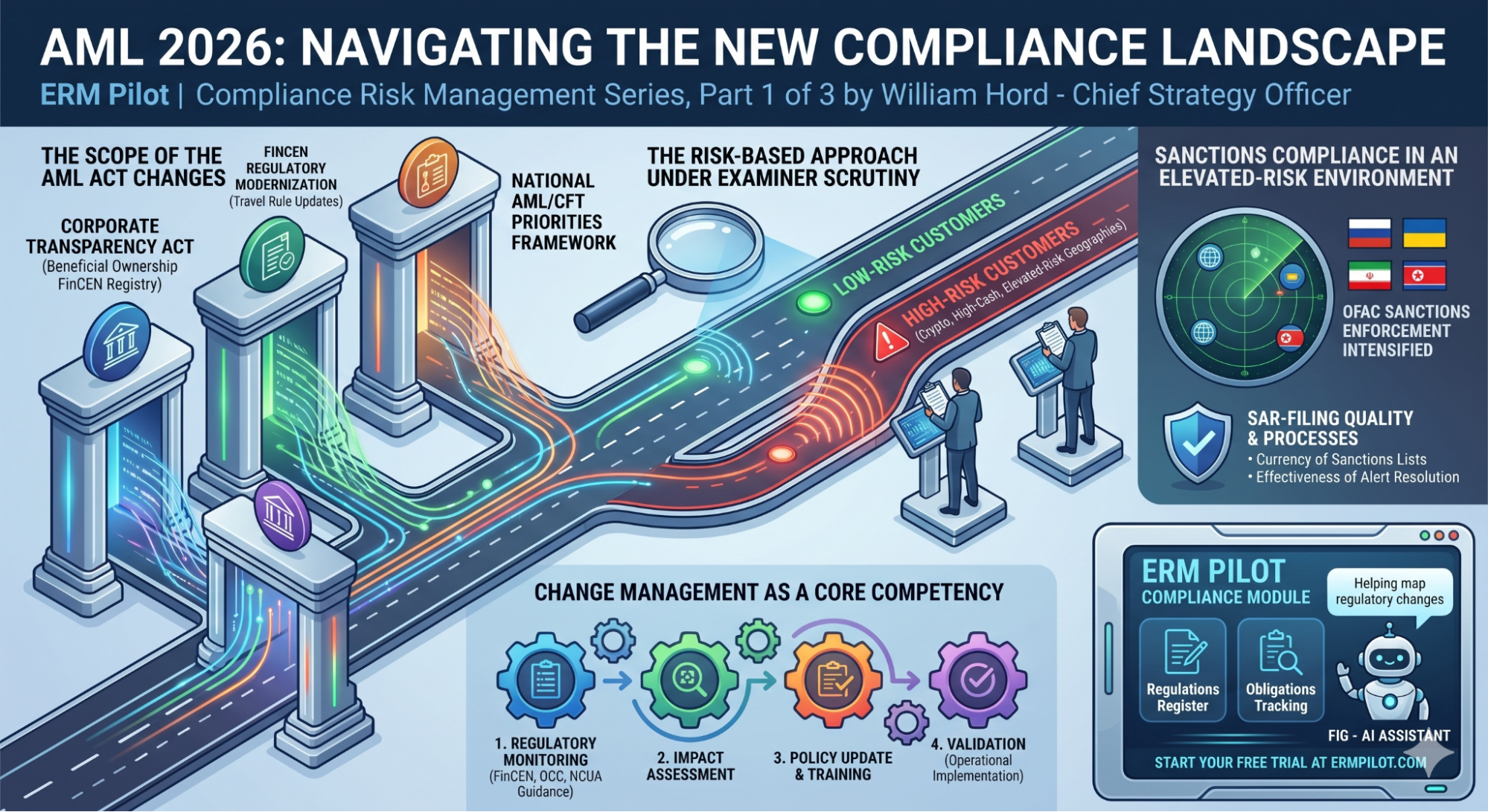
AML programs are being assessed on change management rigor, risk-based implementation, and governance readiness as regulatory requirements continue to evolve.
Read Article
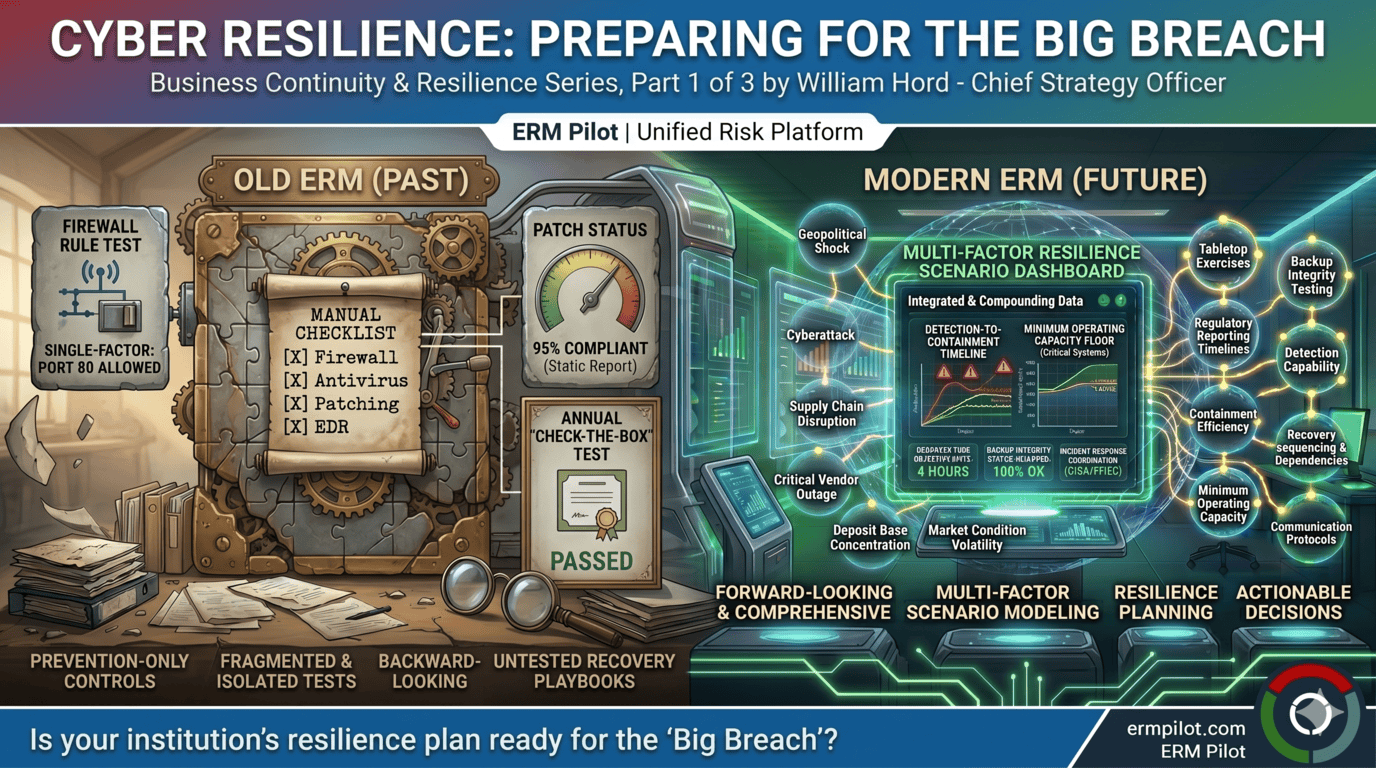
Regulators now evaluate cyber resilience through detection, containment, recovery execution, and tested continuity playbooks rather than prevention controls alone.
Read Article
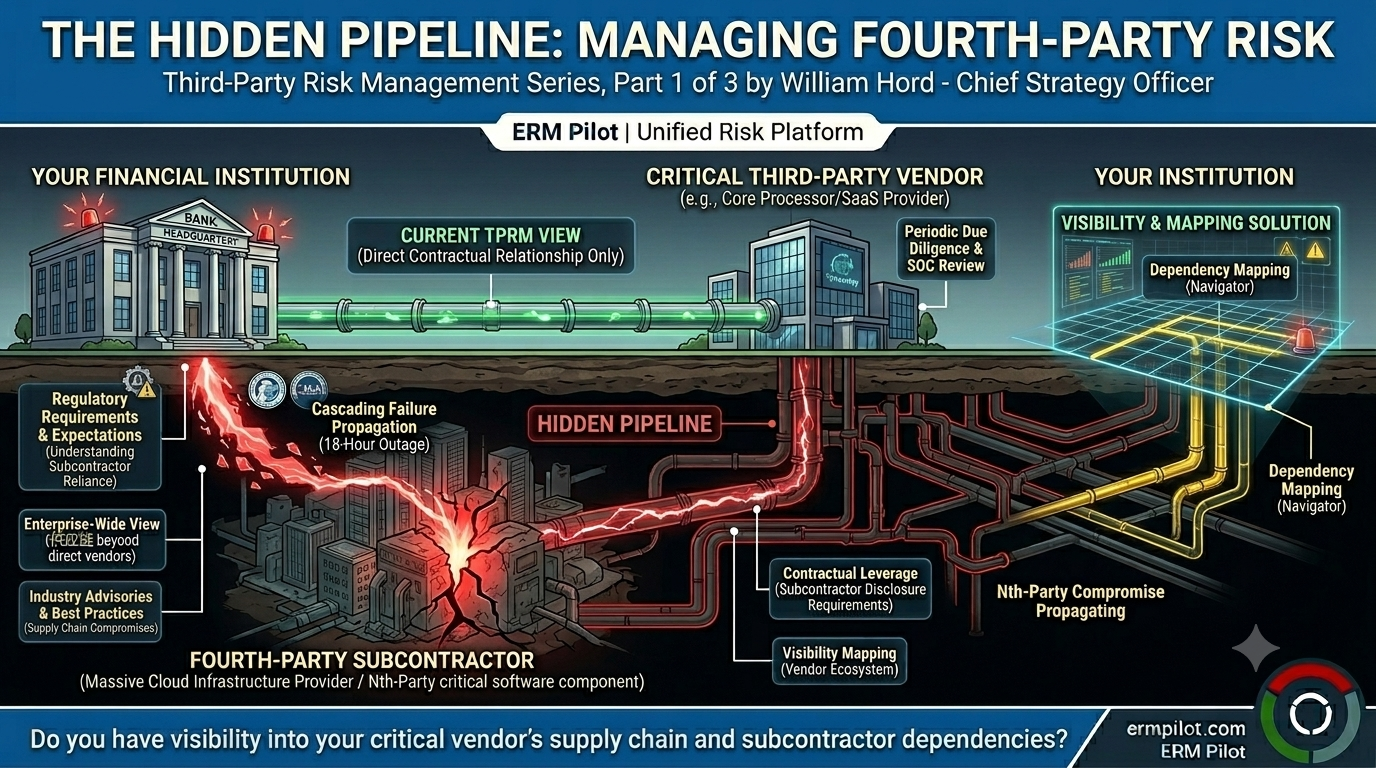
Fourth-party dependencies are now a direct examination concern, requiring stronger subcontractor visibility, contractual controls, and ecosystem-level risk mapping.
Read Article
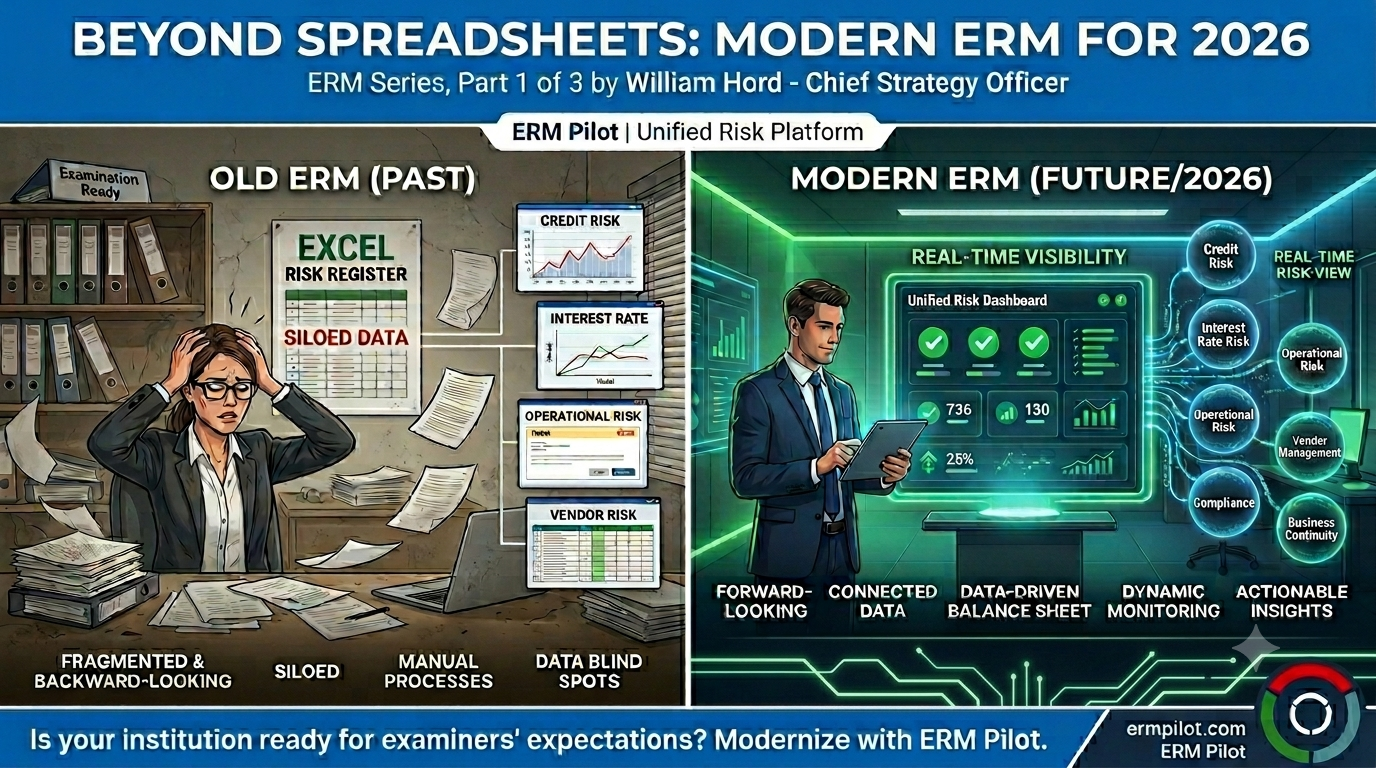
Spreadsheet-centric ERM programs no longer satisfy examiner expectations for integrated, forward-looking risk visibility in a high-volatility environment.
Read Article
Third-party risk has shifted from periodic compliance oversight to a strategic discipline requiring continuous transparency, concentration visibility, and board-level decision support.
Read Article
Many BCM programs pass examinations yet still fail under disruption because tests validate plan familiarity, not real-world resilience across dependency-driven failure conditions.
Read Article
Macroeconomic volatility, geopolitical disruption, and regulatory uncertainty require ERM programs to shift from historical tracking to continuous, forward-looking intelligence.
Read Article
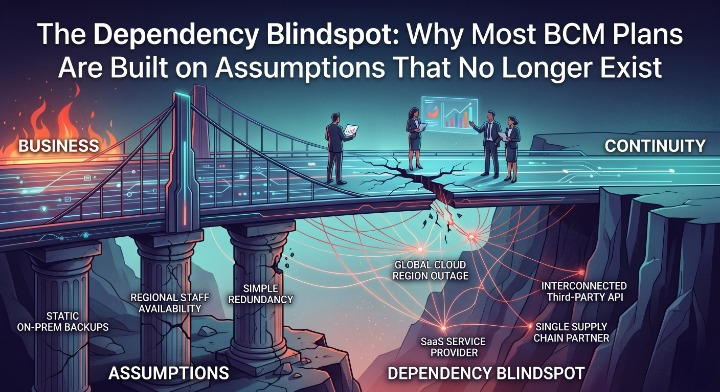
Most BCM plans are still designed for bounded outages, even as cloud, identity, and integration dependencies now drive cascading continuity failures.
Read Article
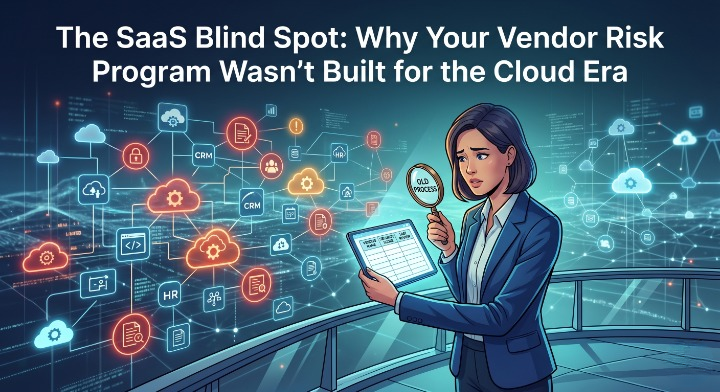
SaaS concentration, fourth-party cloud dependencies, and continuous platform change have outpaced annual vendor review models and static assurance artifacts.
Read Article
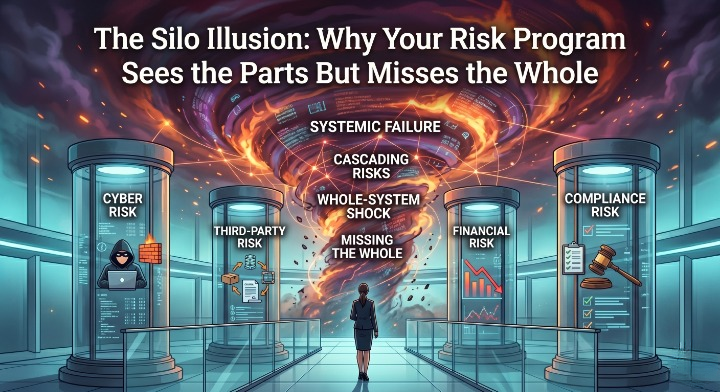
Siloed risk functions can each perform well while still leaving institutions unable to quantify aggregate enterprise exposure across interconnected domains.
Read Article
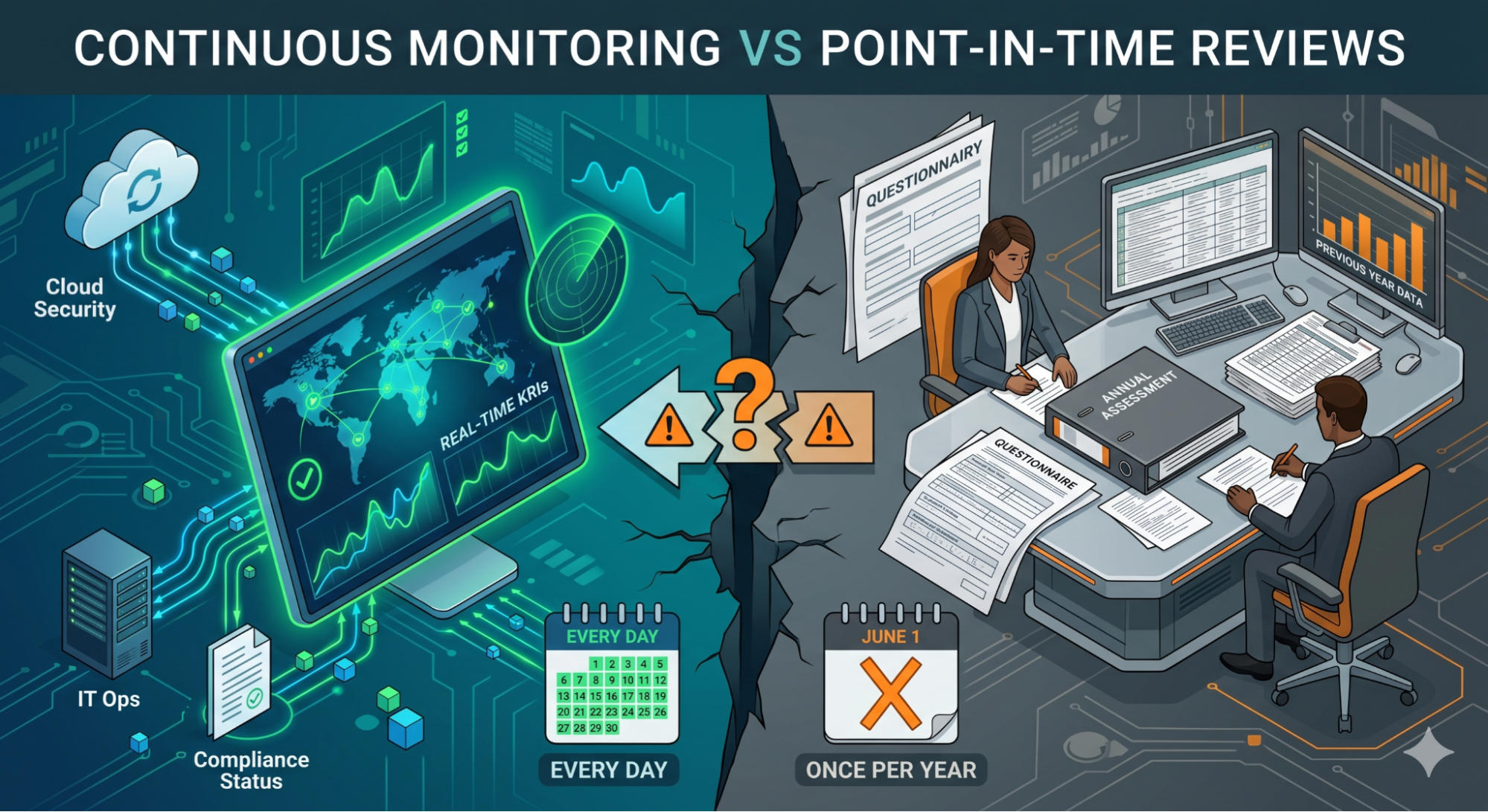
In 2026, static annual vendor reviews leave institutions blind to concentration risk, hidden nth-party dependencies, and rapidly changing third-party exposure.
Read Article
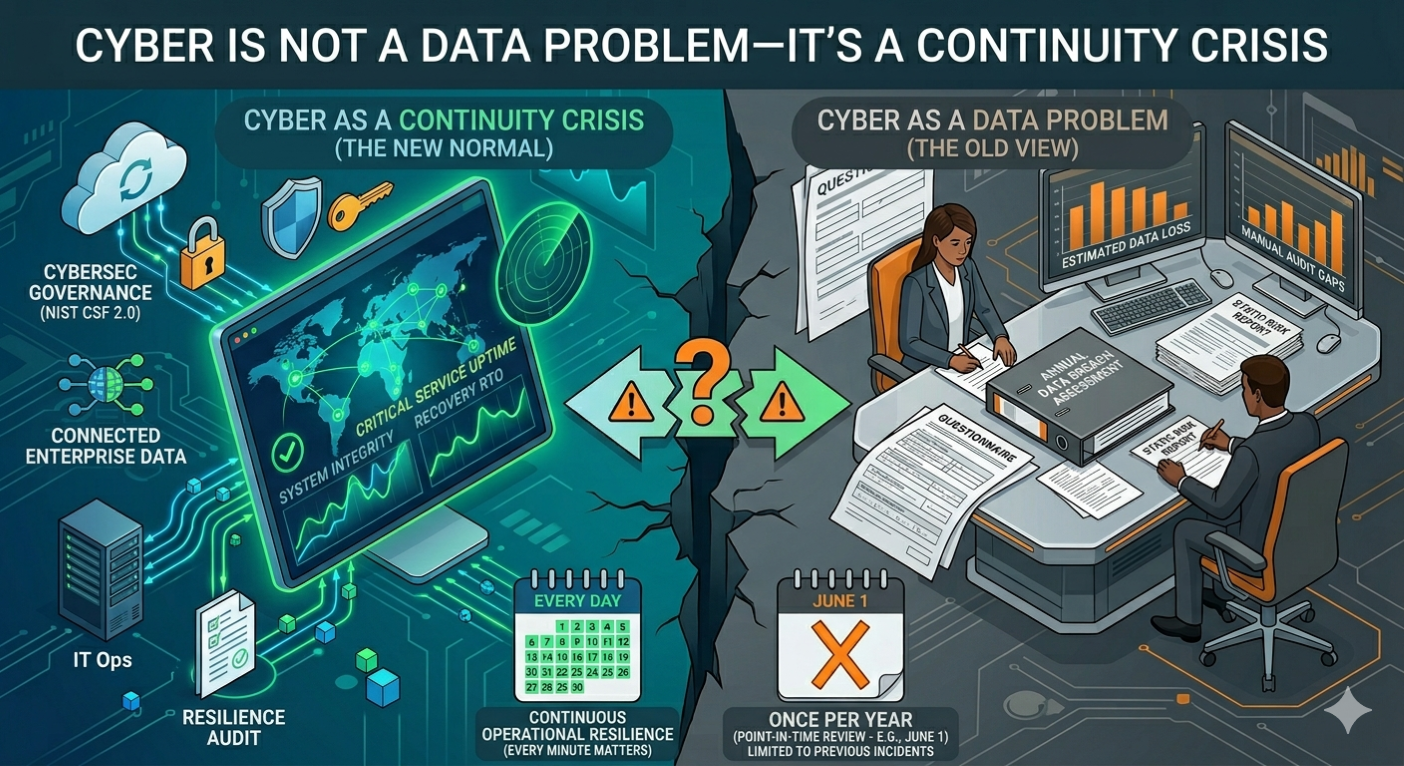
Cyber risk has become an operational resilience event, shifting board and examiner focus from data loss prevention to continuity of critical business services.
Read Article
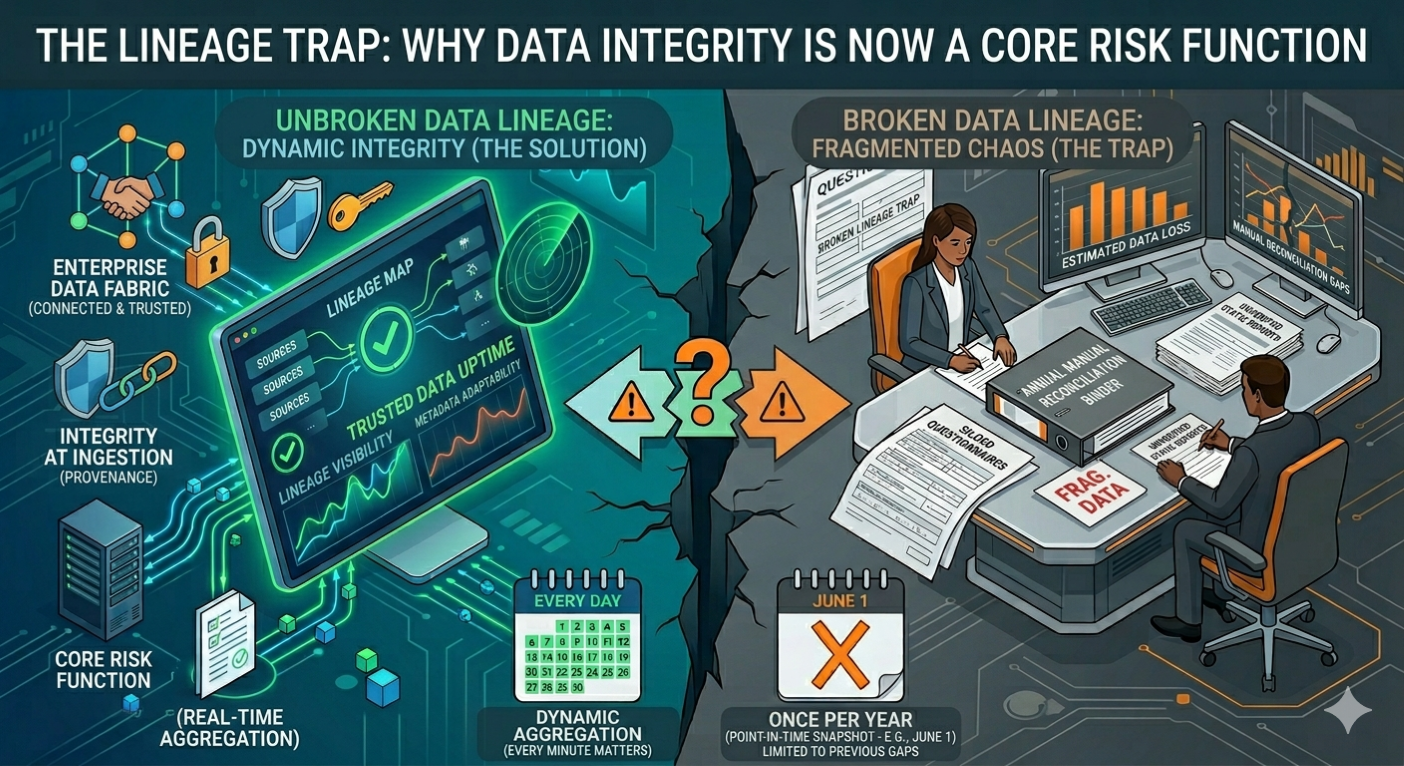
Regulators now expect real-time, traceable risk data lineage, making data integrity architecture a frontline capability for defensible risk management.
Read Article

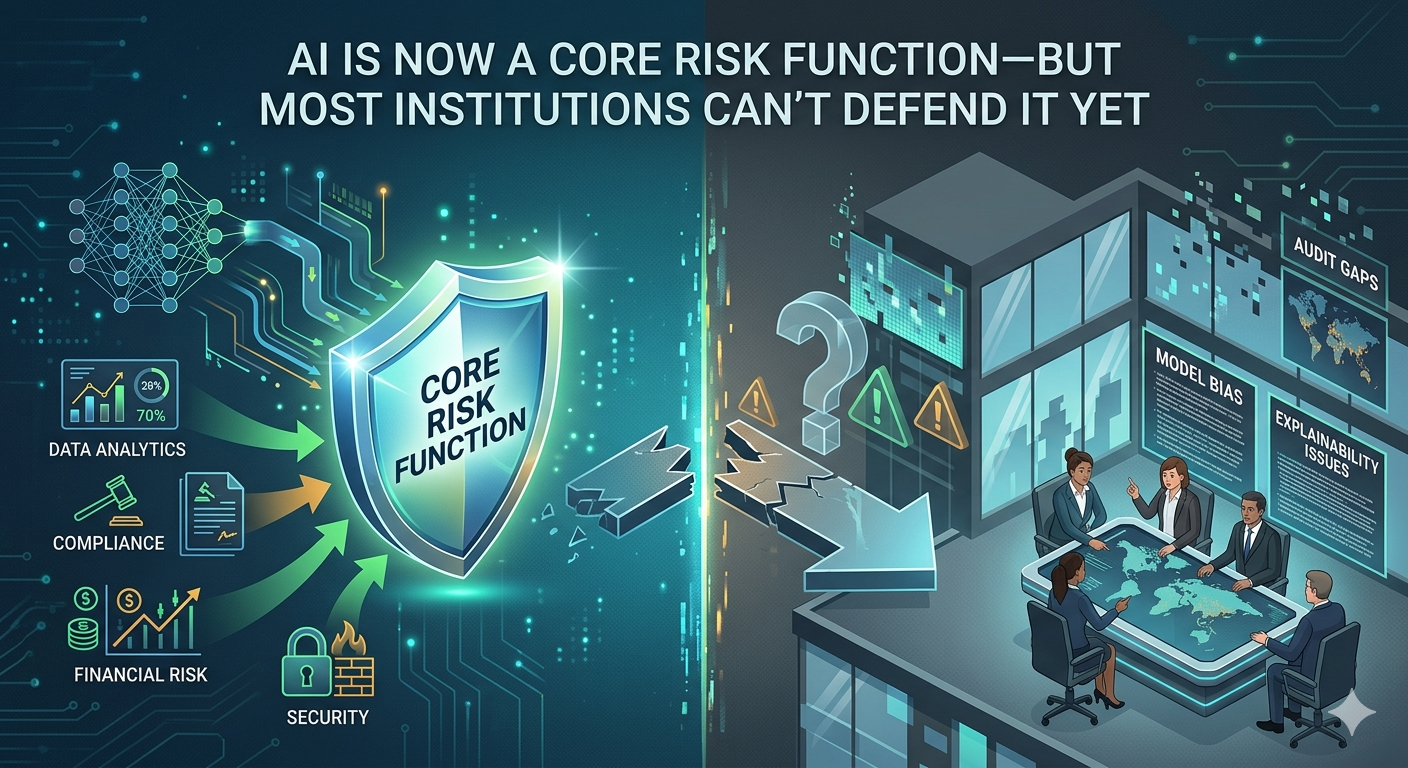
AI is already embedded in risk workflows across financial institutions, but most programs still cannot govern, trace, and defend AI-driven decisions under regulatory scrutiny.
Read Article
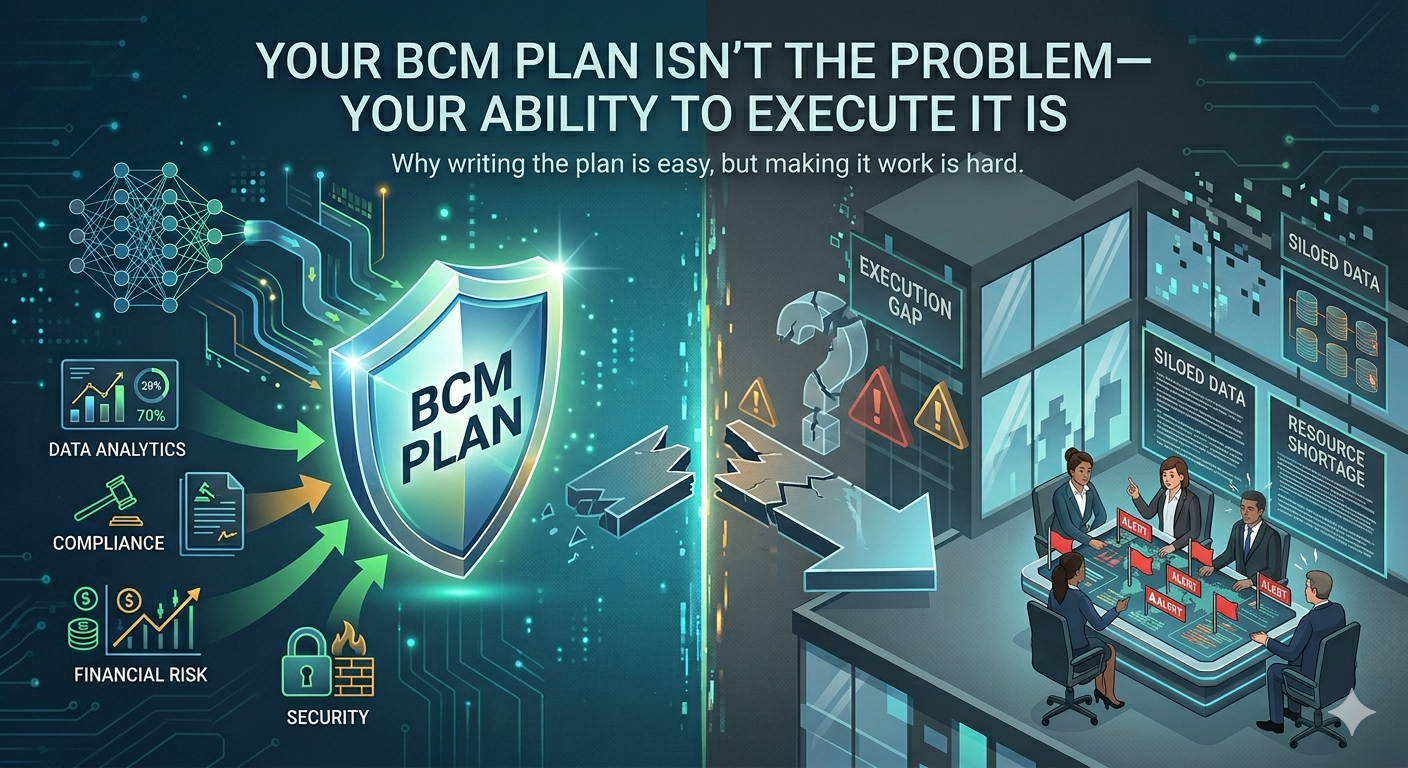
Business continuity expectations have shifted from documented plans to demonstrable execution under disruption, exposing gaps in traditional BCM tooling and operating models.
Read Article

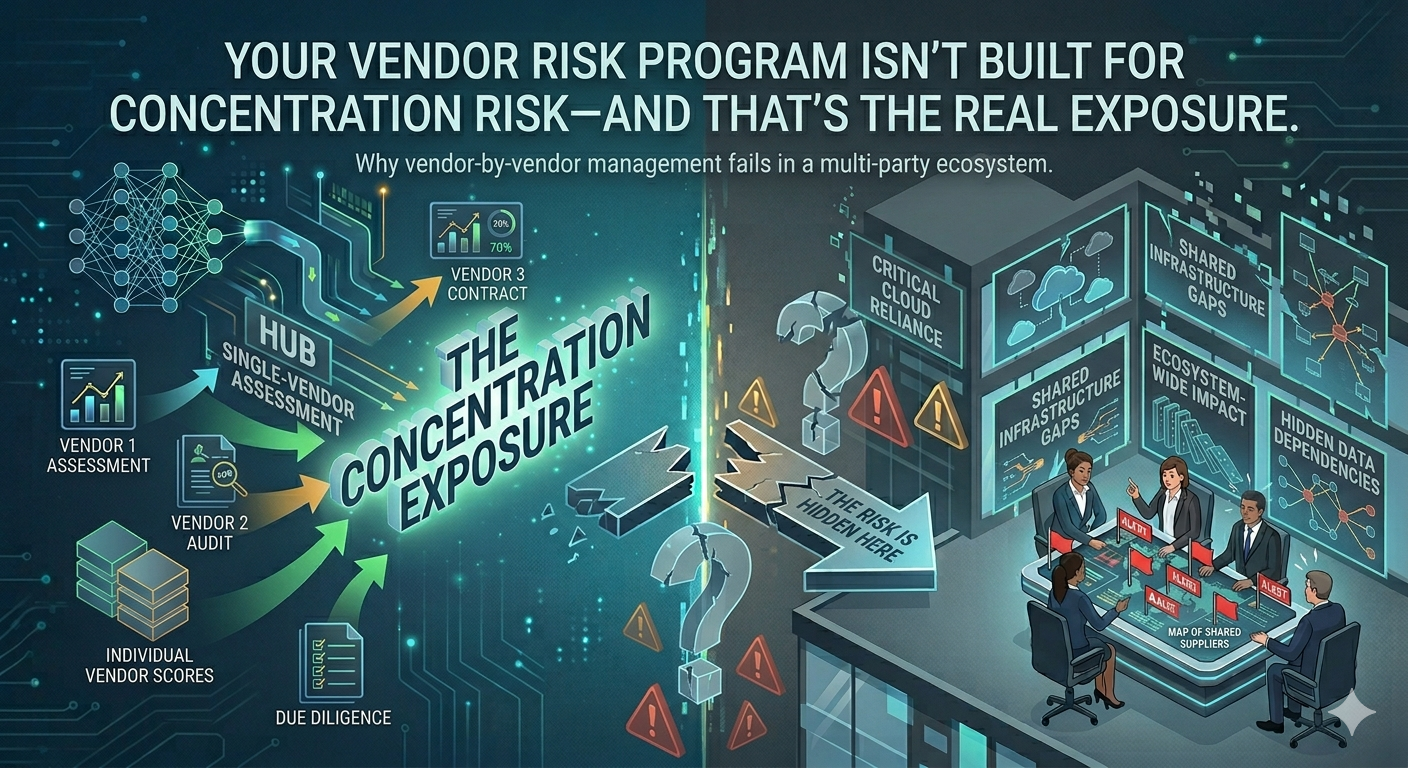
Most third-party risk programs still assess vendors one by one, while concentration and dependency risks now drive the most significant resilience and regulatory exposure.
Read Article
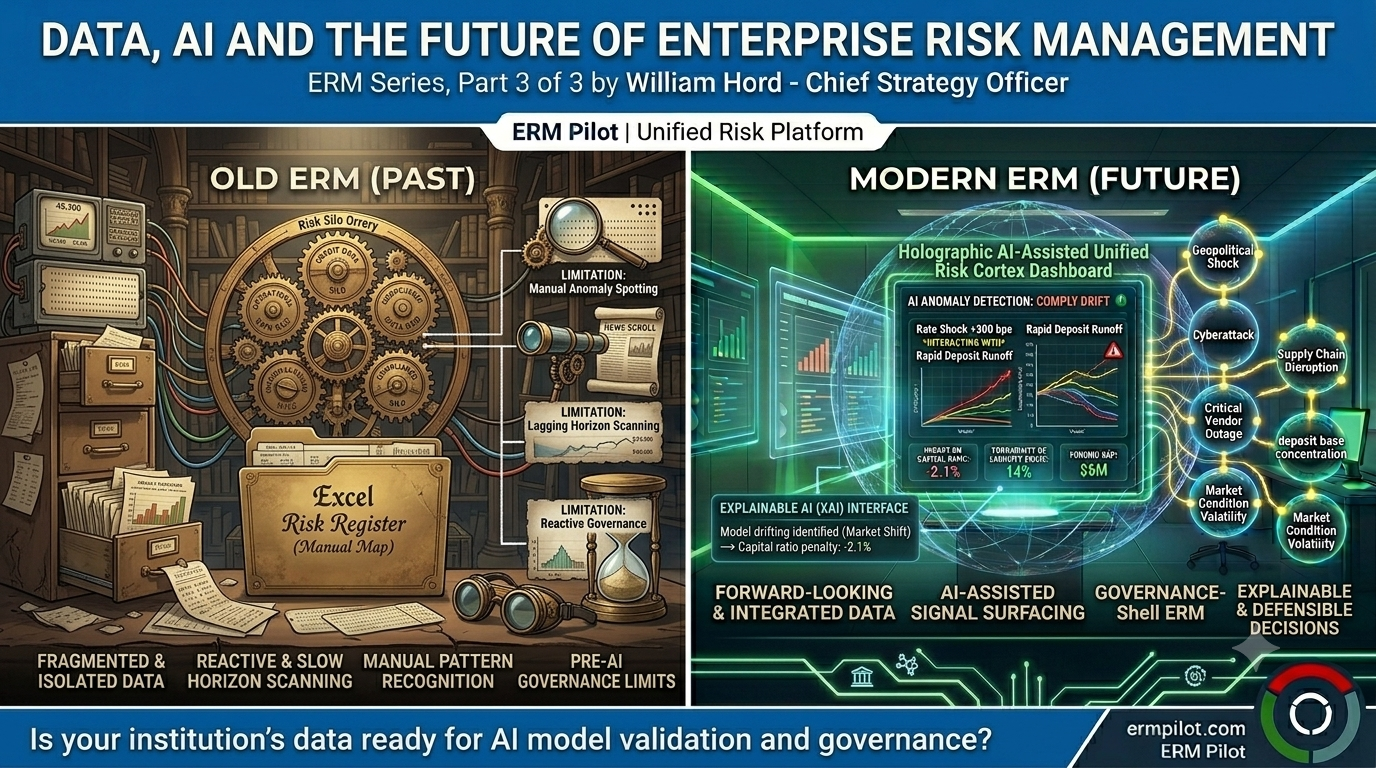
AI introduces a fundamentally different operating model for Enterprise Risk Management. The real shift is from reactive risk documentation to predictive risk intelligence — and it changes every part of the ERM workflow.
Read Article
AI-powered VMS platforms have fundamentally changed the calculus of migration. What used to be the ten biggest barriers to modernization are now ten compounding advantages. This article shows exactly how — and what it means for your bottom line, workforce agility, and competitive position.
Read Article

A frank conversation about why staying on old risk technology is now a strategic liability — and what genuinely modern, AI-native platforms change for CROs, CCOs, and resilience leaders.
Read Article
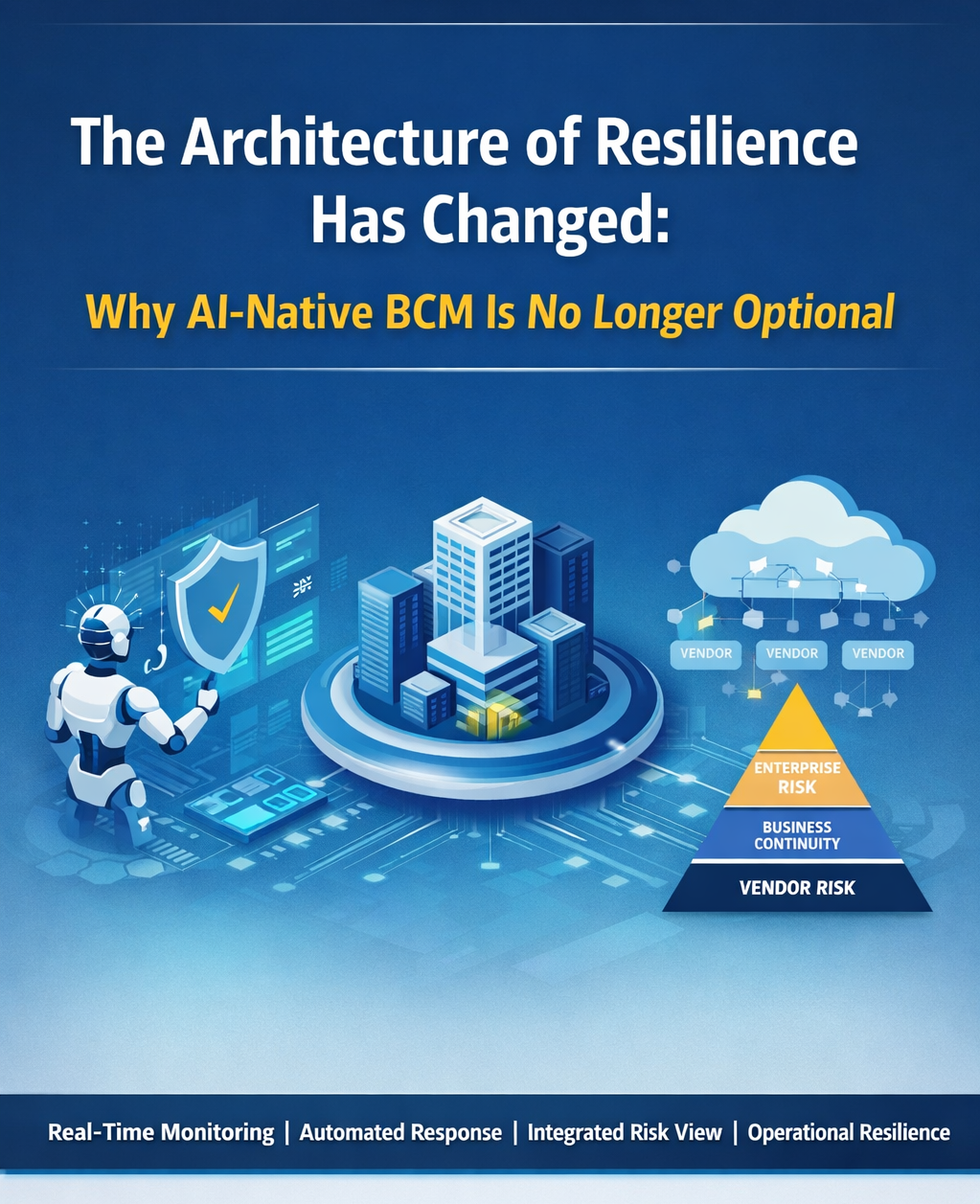
Vendor risk still gets managed like a calendar event in most institutions. Legacy platforms were built for documentation, not continuous exposure management. Here is the case for modernization.
Read Article
Business continuity management has quietly become one of the most strategic functions in financial services. The push toward AI-enabled BCM is about moving from plan-based resilience to intelligence-driven resilience. That shift is necessary. But it is not easy.
Read Article

In 2026, financial institution examiners are no longer evaluating ERM primarily as a set of policies, reports, and governance routines. They are evaluating whether ERM actually functions as a risk intelligence capability.
Read Article

Why the gap between legacy BCM tools and purpose-built AI-native platforms is becoming operationally significant—and why that matters most when BCM connects to ERM and vendor management.
Read Article
Why legacy third-party risk platforms are no longer enough, and how AI-enabled, integrated TPRM changes the operating model from documentation to continuous exposure management.
Read Article

What separates a defensible risk appetite framework from a document that falls apart under regulatory scrutiny.


Read Article
Why legacy, assessment-driven vendor risk programs leave institutions exposed — and what a modern, integrated, AI-native alternative looks like.
Read Article
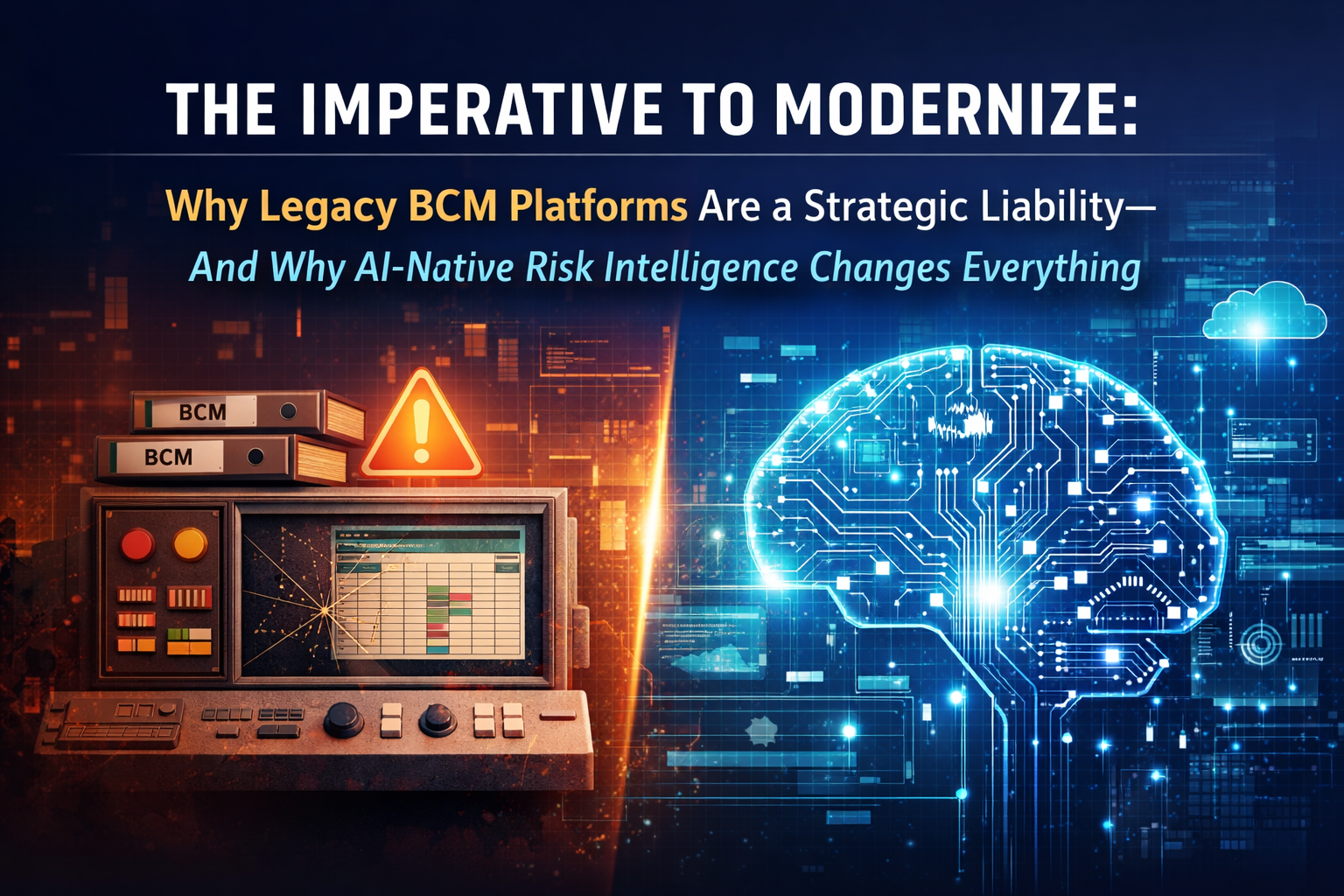
Why legacy BCM platforms now create strategic risk, and what a modern AI-native, integrated risk intelligence architecture looks like in practice.
Read Article
A practical executive-level framework for embedding enterprise risk management directly into strategic planning and decision-making.
Read ArticleWhy legacy risk infrastructure is failing modern enterprises — and what an AI-native, unified risk intelligence platform actually looks like in practice.
Read ArticleA deep dive into the legacy tech debt in financial risk management and how modern solutions are changing the landscape.
Read Article
A closer look at the architectural, operational, and commercial realities behind the AI promises many legacy ERM vendors are making today.
Read Article